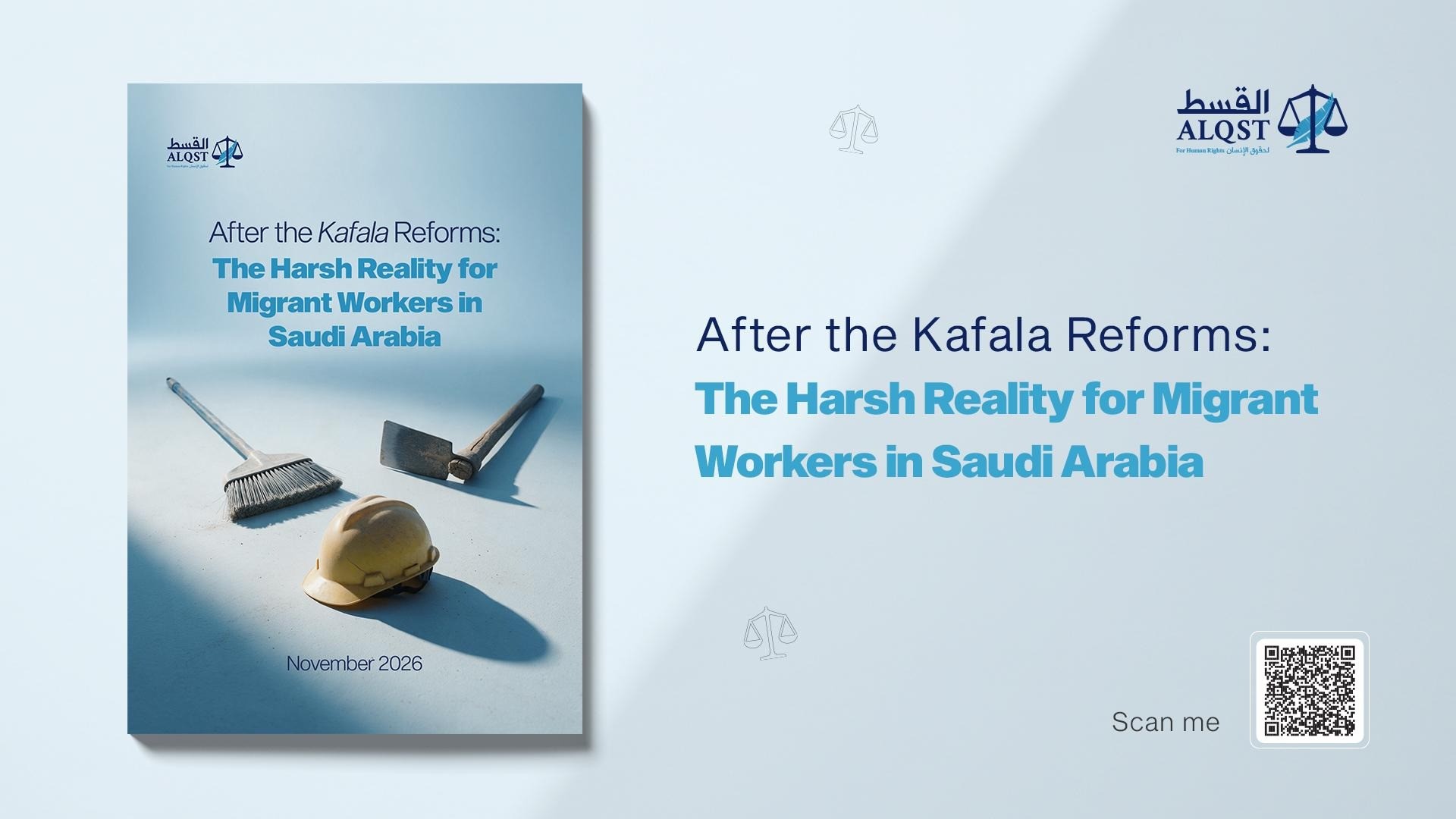
"After the Kafala Reforms: The Harsh Reality for Migrant Workers in Saudi Arabia" reviews the extent to which the published labour reforms have or have not improved the lives and conditions of Saudi Arabia’s estimated 14 million migrant workers.
Executive summary
On 2 March 2025, the Saudi authorities published a lengthy description of purported reforms to the kingdom’s labour laws and regulations, including the claim that the kafala sponsorship system had been abolished and replaced with a “contractual relationship improvement initiative” aiming to strengthen workers’ rights and prevent exploitation. The main changes to the system, as reported by the official Saudi Press Agency, were supposedly intended to increase workers’ freedom of movement and protect them from wage theft and other egregious violations of their rights. The announcement also outlined the use of digital contracts and platforms, and the implementation of a digital Wage Protection Programme.
No date was mentioned, but the article appeared to refer to reforms announced in previous years, notably the Labour Reform Initiative of 2021. No apparent new reforms were put forward, and so the “news” was met with scepticism from labour rights activists, some of whom saw it as a bid to enhance the kingdom’s image ahead of hosting the 2034 FIFA World Cup.
In this report, which includes some harrowing case studies, ALQST reviews the extent to which the published labour reforms have or have not improved the lives and conditions of Saudi Arabia’s estimated 14 million migrant workers. It describes how the kafala system has operated since the 1950s, and the exploitation and abuses it has facilitated, tightly restricting worker mobility and the freedom to change jobs. It examines the power imbalance between Saudi employers and their foreign workers and the consequences of this in terms of one-sided contracts, hazardous working conditions, discrimination in the workplace, vexatious accusations as a mechanism for wage theft, and extortion of illegal recruitment fees.
ALQST’s report highlights the special vulnerabilities of domestic workers not covered by even the poorly enforced Labour Law applying in most other sectors, and the lack of access to justice for migrant workers who live under constant threat of deportation. It notes that maintaining such dismal conditions for migrant workers has knock-on effects for Saudi workers too, by depressing labour standards across the economy, undercutting wages, and normalising poor working conditions for all.
The report concludes that over the past five years in Saudi Arabia, despite official claims to have transformed labour relations, given workers new freedoms, and tackled exploitative practices such as wage theft, little has changed in reality for the majority of migrant workers. It raises a further concern, namely that publicising the purported reforms may persuade prospective workers to move to Saudi Arabia under the false assumption that the well-known abusive practices of the past have now been outlawed, leaving them unprepared for the serious risks and exploitation to which they may still be exposed.