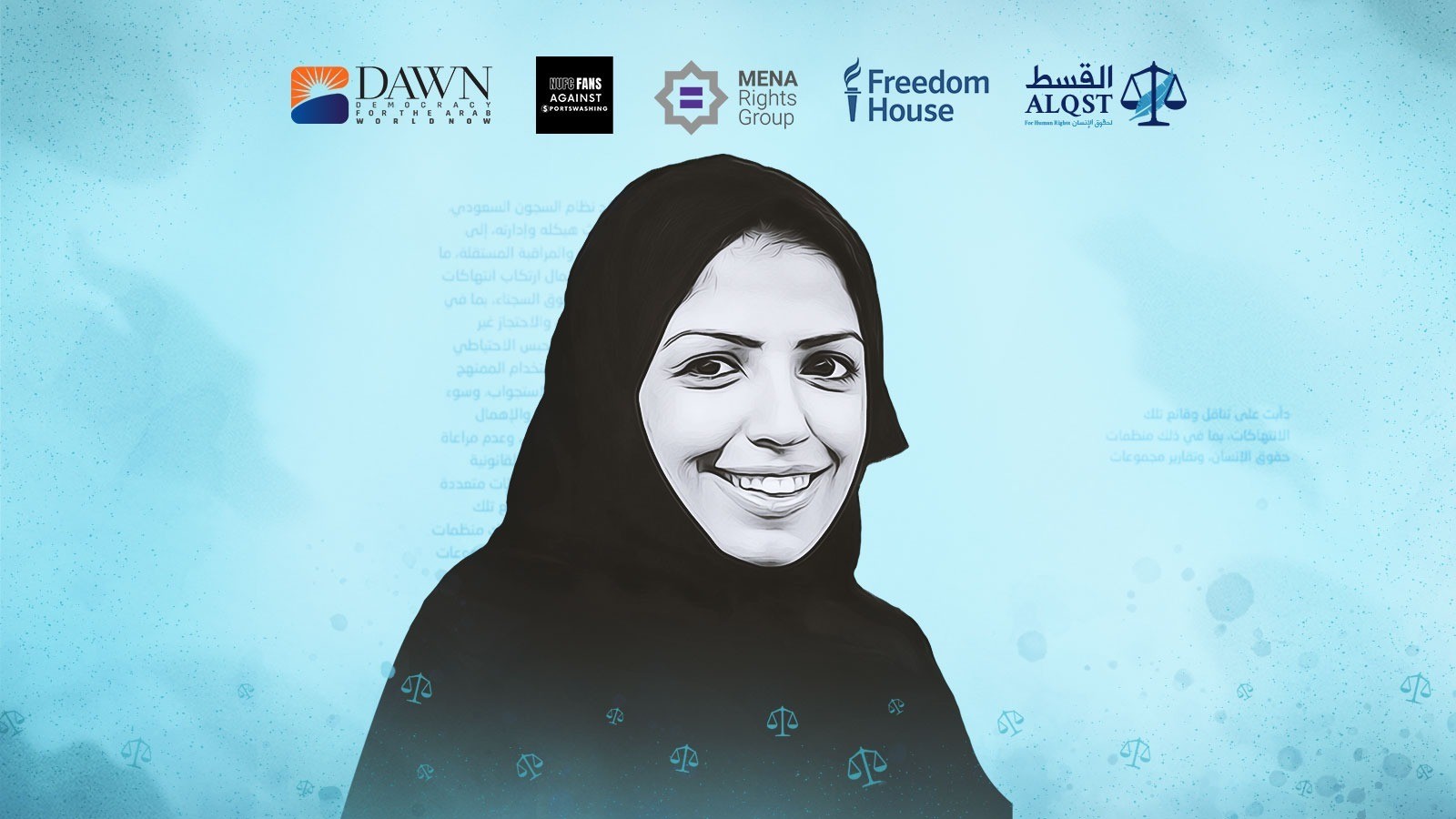
We, the undersigned organisations, welcome the recent decision by a Saudi court to reduce the jail sentence of Saudi prisoner of conscience Salma al-Shehab from 27 years to four years, with an additional four years suspended. This action is a significant step to correct a gross miscarriage of justice in a case that has garnered global attention and condemnation, amid the sweeping crackdown on peaceful dissent and free expression in Saudi Arabia.
We expect al-Shehab to be released within the next few days, and urge the Saudi authorities to ensure she is granted full freedom, including the right to travel to complete her PhD studies at the University of Leeds in the UK.
Women’s rights activist and mother of two al-Shehab, 36, was arrested on 15 January 2021, during a family holiday in Saudi Arabia. She was subjected to nearly 10 months of solitary confinement and lengthy interrogation before being brought before the Specialised Criminal Court, a judicial body routinely used by the authorities to suppress dissent and silence activists. Al-Shehab was convicted and sentenced simply for following and retweeting dissidents and activists on X (formerly Twitter).
Initially sentenced in March 2022 to six years in prison, al-Shehab’s term was drastically increased in August 2022 to 34 years on appeal, one of the longest sentences ever imposed on a peaceful activist for exercising the right to free expression. In January 2023 her sentence was somewhat reduced to 27 years but remained emblematic of the arbitrary and unjust nature of the Saudi judicial system. The latest news is that she was resentenced in September 2024 to four years, with four years suspended, after being brought for retrial. This huge discrepancy between sentences handed down at different stages in the case underscores the need for systemic reform of the Saudi judicial system to ensure fair trials and consistent sentencing and to protect human rights.
While we welcome this significant reduction in al-Shehab’s sentence, we remain deeply concerned about the prolonged ordeal she has endured and the violations of her rights. In prison, her health has been deteriorating, and she has previously gone on hunger strike in protest against her unjust imprisonment. Her imprisonment has also separated her from her young children and derailed her academic career.
We reiterate our call for al-Shehab’s immediate and unconditional release and urge the Saudi authorities to restore her fundamental rights, including the right to travel freely and to finish her studies, and compensate for her wrongful detention.
Signatories:
- ALQST for Human Rights
- DAWN
- Freedom House
- MENA Rights Group
- Newcastle Fans Against Sportswashing