By Josh Cooper, ALQST's Deputy Director (this article was originally published in Al-Jazeera on 6 August 2021)
It is sometimes said that a society can be judged by how it treats its prisoners. In the case of repressive regimes, however – from Egypt to Cambodia – the treatment of prisoners says more about a country’s rulers than the society itself.
In Saudi Arabia, while Crown Prince and de facto ruler Mohammed bin Salman has sought to portray himself as a progressive reformer, invoking his ambitious Vision 2030 and grandiose projects like the megacity of Neom, he has at the same time presided over a human rights crackdown unprecedented in its ferocity.
Conditions in Saudi Arabia’s prisons and detention centres starkly expose the true nature of Mohammed bin Salman’s rule. A new and in-depth report from ALQST, a Saudi-focused human rights NGO, research for which included a unique survey of prisoners, reveals that violations of prisoners’ rights have increased to an alarming degree over the past five years.
Take, for example, the contrast between the lofty goal expressed in the crown prince’s Vision 2030 of developing a “comprehensive, effective and integrated health system” in the country and the reality on the ground in Saudi prisons: chronically unhealthy and inhumane conditions marked by overcrowding, poor hygiene, medical neglect, crime and drug abuse, and the spread of infectious diseases.
Amid such conditions, and without prisoners being adequately protected, COVID-19 has inevitably taken its toll. Following a virus outbreak in al-Ha’ir Prison, healthy prisoners were kept on the same wing as those already infected, and then vaccinated after developing symptoms themselves – contrary to medical guidelines, and with fatal consequences.
Last year, in another act of gross – and in this case deliberate – medical negligence by the Saudi authorities, the pioneering human rights activist Abdullah al-Hamid died in prison at the age of 69, after being repeatedly denied vital heart surgery. When al-Hamid eventually suffered a stroke he was not taken to hospital for several hours, and he died a few days later.
ALQST’s research shows that neglect, harassment and abuse are routinely carried out against prisoners of conscience, whose numbers have swelled amid repeated waves of arrests. Political prisoners commonly face forms of ill-treatment including physical and psychological abuse, harassment, solitary confinement and denial of family contact.
Yet it is outside the formal Saudi prison system, in unofficial places of detention, that some of the worst violations have taken place under Mohammed bin Salman. These have included the mistreatment of hundreds of business leaders and others held at the Ritz-Carlton hotel in Riyadh in 2017, and the torture and sexual harassment of women’s rights activists the following year in a secret facility nicknamed “the hotel” or the “officer’s guesthouse”.
New details of abuse continue to come to light, such as the case of human rights activist Mohammed al-Rabiah, who underwent months of torture following his arrest in early 2018. He was recently sentenced to six years in prison for his activism, and a ruling is expected on his appeal this month.
Another case that surfaced recently actually involved torture inside a royal palace. Following his arrest in 2016, preacher Sulaiman al-Dowaish was taken to the basement of a palace in Riyadh, to cells kitted out with torture equipment and managed by members of Mohammed bin Salman’s entourage, where he was beaten until drenched in blood. Nothing has been heard of al-Dowaish since the last reported sighting of him in July 2018.
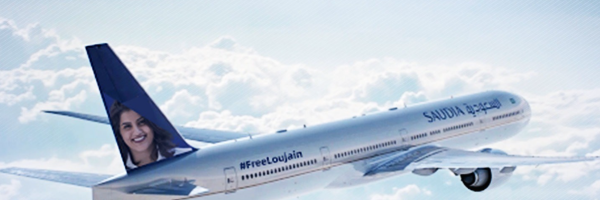
And yet despite such shocking accounts coming to light, the Saudi authorities remain intent on denial and deflection. In 2019, a request from British MPs to visit Saudi prisons to investigate reports of torture was ignored. More recently, in the sham trial of women’s rights activist Loujain al-Hathloul, the court dismissed the torture inflicted on her during her detention.
With justice denied for the countless victims inside Saudi Arabia, it is up to the international community to ensure accountability. Although the murder of Jamal Khashoggi shook the world in 2018, today the picture is more mixed, with yawning gaps between rhetoric and action. The European Parliament recently passed a resolution calling on EU member states to hold Saudi Arabia to account over its human rights record; meanwhile, the Biden administration’s pledges to “recalibrate” US-Saudi ties now appear increasingly unlikely to be fulfilled.
But as Mohammed bin Salman continues to portray himself as a reformer and champion of Saudi women, let’s remember the fate of growing numbers of Saudi prisoners, many arrested merely for questioning his policies, and judge the crown prince as he deserves to be judged.