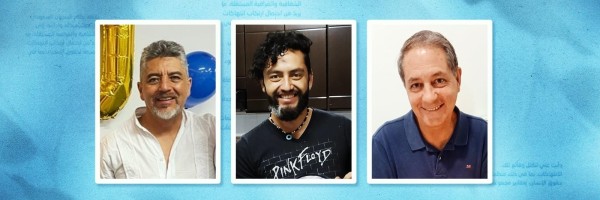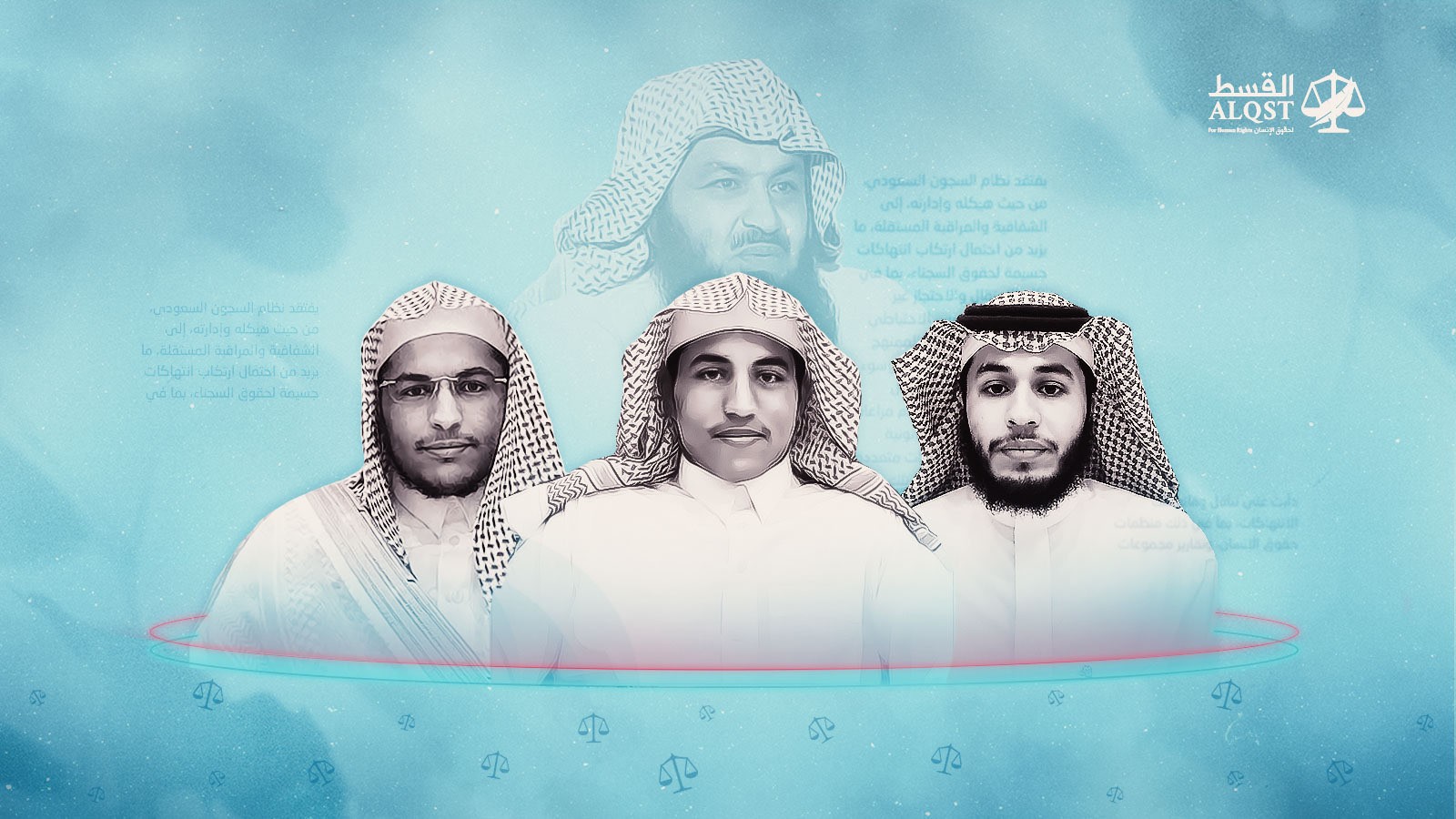
ALQST is concerned to learn of further repressive measures against the family of preacher Sulaiman al-Dowaish, who was arrested and tortured in April 2016 and has been a victim of enforced disappearance since July 2018. One of his sons, Malik al-Dowaish, was recently resentenced to 15 years in prison for advocating for his father, and another son, Abdulwahhab al-Dowaish, was arrested for the third time earlier this month. A third son, Abdulrahman al-Dowaish, remains in detention despite the expiry of a two-year prison sentence in September 2023. All three brothers are being arbitrarily targeted in reprisal for their efforts to discover the whereabouts of their father and to secure his release.
These latest developments serve as a potent reminder that, despite a recent spate of prisoner releases, the Saudi authorities are continuing their relentless crackdown on peaceful dissent and their vindictive treatment of family members of those already detained.
Sulaiman al-Dowaish was arrested on 22 April 2016 after posting on Twitter comments critical of King Salman and Prince Mohammed bin Salman, and was brutally tortured by high-ranking officials at an unofficial, private, prison in Riyadh. The last reported sighting of him was in July 2018. Since then, nothing has been heard of him or his state of health or whereabouts; he remains forcibly disappeared.
His sons have been targeted for punishment for seeking information about Sulaiman by messaging officials, challenging the official narrative concerning his fate, and sharing public appeals for his release. In the course of one argument with an official at the Interior Ministry in 2017, Abdulwahhab al-Dowaish told the official: “We love our father dearly; either release him or put us in prison with him.” He was arrested the following day. After serving a prison term, he was arrested again in 2021, and for a third time just over a week ago.
Malik al-Dowaish was arrested in July 2022, likewise in reprisal for advocating for his father, and was sentenced to 27 years in prison. He was sent for retrial last year and recently received a new sentence of 15 years, which, although a substantial reduction, remains a gross miscarriage of justice.
The third brother, Abdulrahman al-Dowaish, remains in detention despite the expiry of a two-year prison sentence in September 2023; there has been no news of him since then. His treatment illustrates a worrying trend in Saudi Arabia, whereby prisoners of conscience often continue to be arbitrarily detained even after their sentences expire, in violation of basic international standards and the kingdom’s own domestic legislation.
From all of this it can be clearly seen that while the recent releases of some prisoners of conscience are significant, and a testament to the power of sustained campaigning, they do not signal a fundamental turning point in the Saudi authorities' dire record on human rights. Even after being released, prisoners of conscience generally continue to face heavy restrictions, notably travel bans, and many more remain arbitrarily imprisoned for the peaceful exercise of their rights.
ALQST condemns the latest targeting of the al-Dowaish family and all other cases of reprisals against family members of detainees. It urges the Saudi authorities to disclose the fate and whereabouts of Sulaiman al-Dowaish, and to release both Sulaiman and his three sons, Malek, Abdulrahman and Abdulwahhab al-Dowaish.