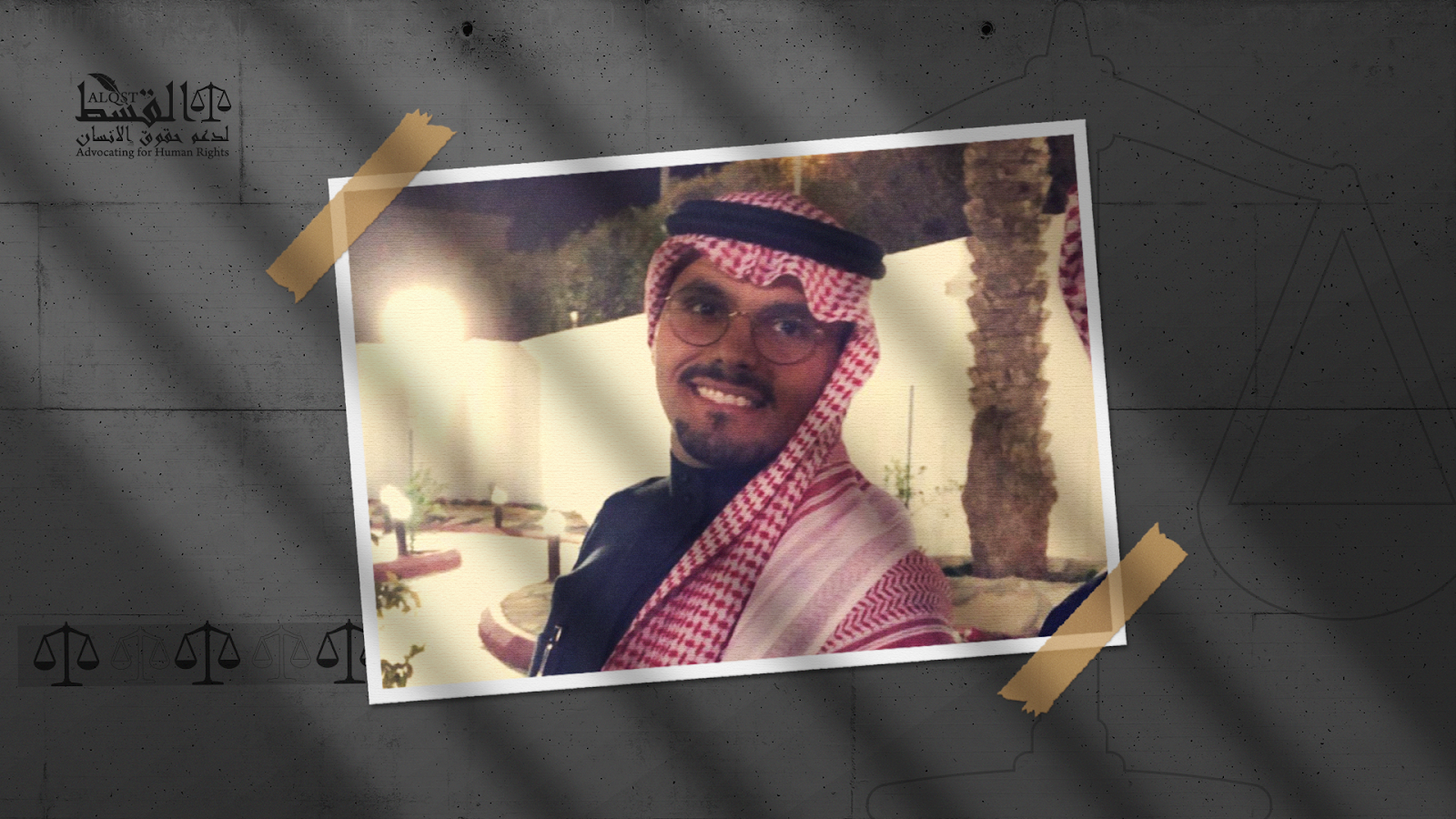
ALQST has learned that human rights activist Mohammed al-Rabiah was subjected to brutal torture in detention, including beatings, electric shocks, and being hung upside down. He currently faces trial before the Specialised Criminal Court (SCC), where the Public Prosecution is calling for a 25-year prison sentence against him, on charges relating to his peaceful activism.
Reliable sources have informed ALQST that following al-Rabiah’s arrest on 15 May 2018 he was subjected for months to brutal torture in detention. Al-Rabiah, who suffers from a herniated disc, was tortured by electric shocks and waterboarding; held in a small wardrobe for several days, unable to sit or sleep; hung upside down by his feet; and beaten until unconscious.
He was also starved for the first year of his detention, and taunted by being offered empty food trays. All he was able to eat was snacks during family visits, which were permitted just once a month. This situation lasted for roughly a year.
On 21 March 2021, al-Rabiah’s case was transferred to the Specialised Criminal Court (SCC), and he is currently at risk of a lengthy prison term, with the Public Prosecution calling for a 25-year sentence and a travel ban on the basis of ta’zir (the judge’s discretion). This is under several articles including Article 6 of the Anti-Cybercrime Law and Articles 53 and 55 of the Law on Combating Crimes of Terrorism and its Financing (the Counter-Terrorism Law).
The charges against him relate to his peaceful activism and defence of human rights. They include “seeking to shake the social fabric or national cohesion”, “instigating strife”, “carrying out foreign agendas that disrupt the kingdom’s security and stability”, and “authorising and publishing a book containing suspicious trends”.
Al-Rabiah was arrested during a campaign of arrests of women human rights defenders (WHRDs) as well as several men who advocated for women’s rights. Further arrests followed between May and July 2018. Al-Rabiah had previously been targeted by the authorities for supporting women’s right to drive.
In the months following their arrests, ALQST was informed that many of the WHRDs suffered sexual harassment, torture and other forms of ill-treatment during interrogation, including being stripped naked, groped, beaten and subjected to electric shocks.
ALQST’s Executive Director Alaa Al-Siddiq commented: “This series of violations against al-Rabiah show the pervasive and cruel brutality of the Saudi authorities. Despite the authorities’ promises of reform, cases like this are a real litmus test of their true intentions: if they have any serious thought of human rights reform, they must release him immediately.”
ALQST calls on the Saudi authorities to drop all charges against Mohammed al-Rabiah and release him immediately and unconditionally, as well as all those detained for the peaceful expression of their opinions or for acting to promote human rights. Furthermore, they must allow a prompt, effective and impartial investigation into the allegations of torture.