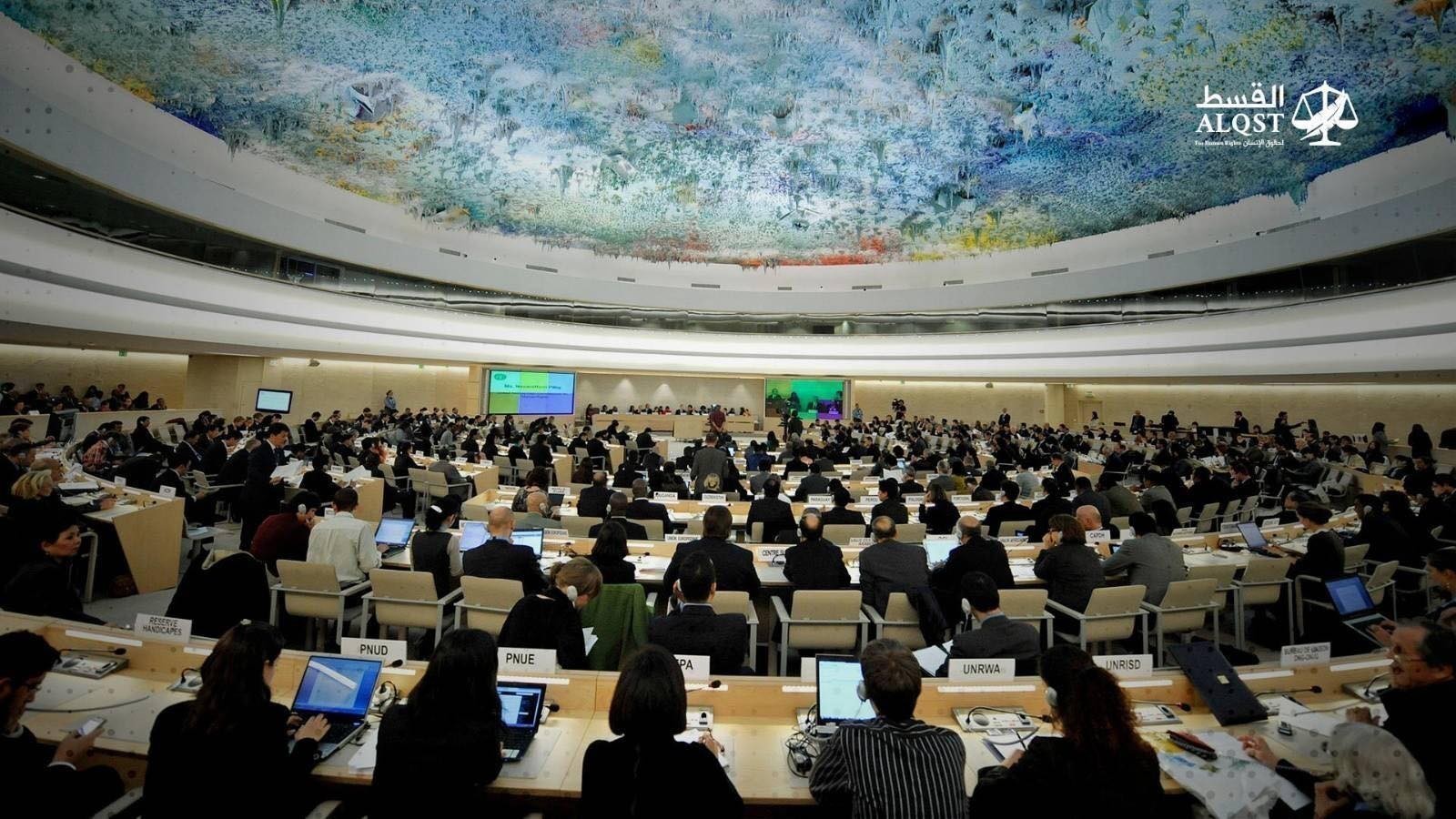
During the 62nd Session of the UN Human Rights Council (15 June - 8 July 2026) , ALQST and the Gulf Centre for Human Rights delivered a joint oral statement highlighting urgent human rights concerns in Saudi Arabia and the wider region.
The statement was addressed to the UN Special Rapporteur on extra-judicial summary or arbitrary executions, as he presented his report to the UN Human Rights Council about the death penalty from the perspective of the prohibition of torture and other forms of ill-treatment.
The statement can be read in full below.
Joint oral statement during the Interactive Dialogue with Special Rapporteur on Extra-Judicial Executions
Thank you Mr. President,
This is a joint statement by ALQST for Human Rights, the MENA Rights Group, and the Gulf Centre for Human Rights.
We thank the Special Rapporteur for this important report. We welcome its central conclusion that the severe physical and psychological suffering caused by capital punishment is not incidental, but inherent throughout the “death penalty trajectory”, from arrest and interrogation to detention, execution and the impact on families.
This analysis is highly relevant to retentionist States in the Gulf region, Iran and Iraq. Across these contexts, the death penalty is frequently imposed amid allegations of torture, coerced confessions, unfair trials, secrecy and denial of effective safeguards. In Saudi Arabia and Bahrain, death sentences have followed proceedings raising serious torture and due process concerns. In the United Arab Emirates, national security prosecutions have involved restrictions on defence rights. In Iran, executions continue for offences that do not meet the “most serious crimes” threshold, including security-related charges, and cases have involved forced confessions and denial of family rights. In Iraq, terrorism-related capital proceedings have relied on confessions despite unresolved torture allegations.
We also welcome the report’s recognition that families suffer when denied notice, final visits, remains or burial information.
Special Rapporteur, given your finding that suffering throughout the death penalty trajectory is inherent to capital punishment itself and may amount to torture or other ill-treatment, what legal obligations do retentionist States have to move beyond procedural reforms and adopt abolition as the only means of ensuring compliance with the absolute prohibition of torture and the protection of human dignity?
Thank you.