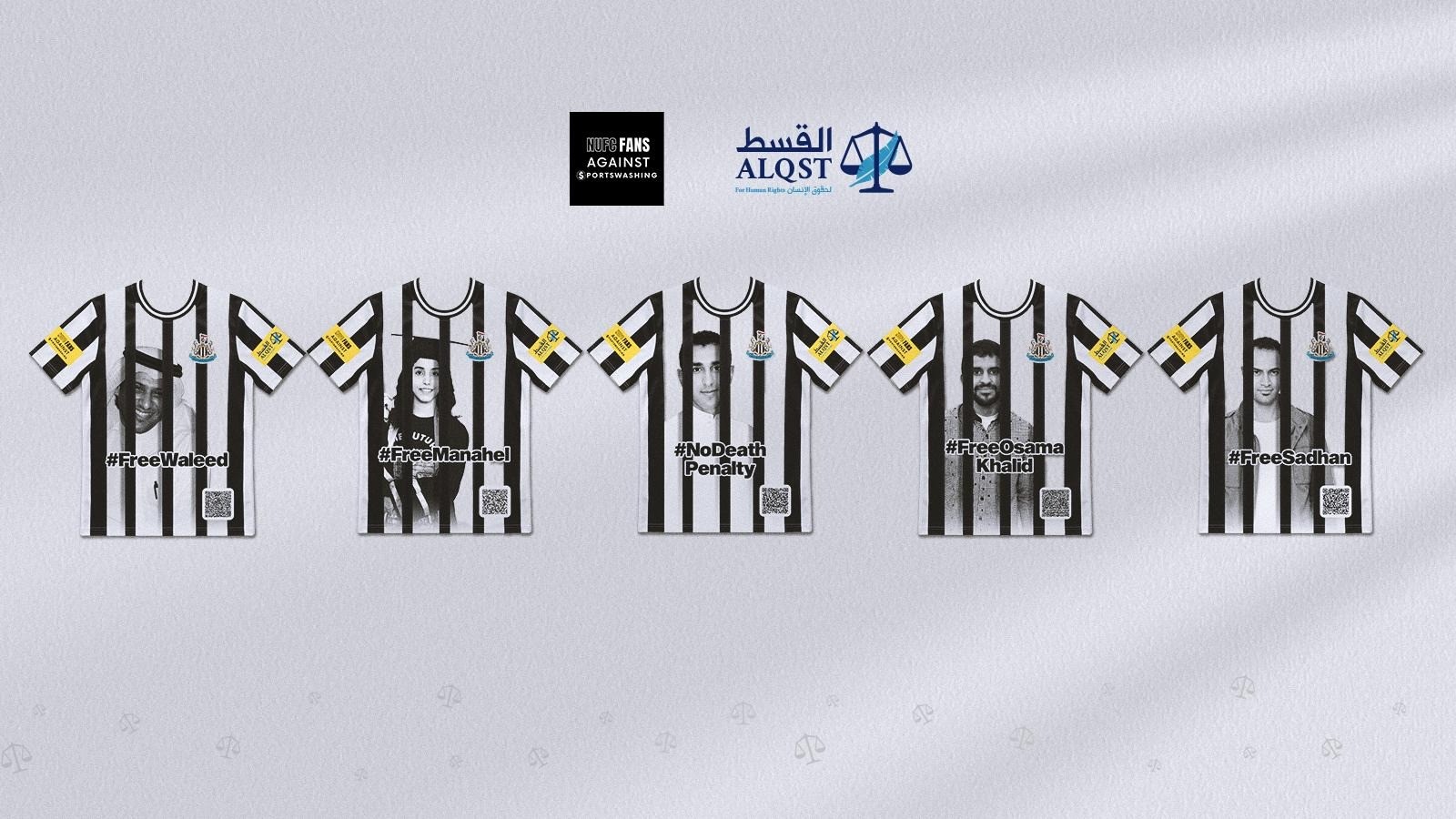
As Newcastle United FC marks five years of Saudi ownership, and amid a crisis of governance in English Premier League football, ALQST and Newcastle fans are calling on the newly elected City Council to step up and take a stronger position on the deteriorating human rights situation in Saudi Arabia.
On 7 October 2021, after 14 years under an unpopular previous owner, Newcastle United FC was acquired by Saudi Arabia’s sovereign wealth fund, the Public Investment Fund (PIF), raising concerns about foreign state ownership of football clubs and the potential for repressive states to wield undue influence. At the time, the Premier League allowed the takeover on the basis that it had “received legally binding assurances that the Kingdom of Saudi Arabia will not control Newcastle United Football Club”. In fact the PIF is inseparable from the Saudi state, being chaired by the Crown Prince, and has facilitated and benefited from human rights abuses.
The PIF’s purchase of Newcastle United was widely seen as part of a broader strategy by the Saudi authorities to use sport to enhance their image and extend their soft power around the world, including the United Kingdom. Some people argued optimistically that Saudi ownership would draw attention to pressing rights issues in Saudi Arabia, but the five years since then have seen the kingdom’s human rights record continue to deteriorate:
- There has been a notable increase in use of the death penalty, with 2025 and 2024 witnessing the highest execution tolls ever recorded in the country.
- Saudi courts have handed down unprecedentedly long prison sentences for individuals exercising their right to free speech.
- There have been brutal rights violations linked to the Neom megacity project, featured as a 2034 World Cup venue.
- Many former political prisoners and their families continue to be cruelly and arbitrarily banned from travelling outside the country.
- Women, despite some positive reforms, remain second-class citizens.
ALQST and NUFC Fans Against Sportswashing (NUFCFAS) have engaged with various stakeholders on these issues over the past years. ALQST has twice visited Newcastle to meet councillors, journalists and supporters, including a meeting in early 2025 with the then Council Leader, Karen Kilgour, to discuss human rights concerns and our calls for action. Following council elections in May 2026, and as we approach five years of Saudi ownership of Newcastle United, we are calling on the new Council to take a stronger pro-human rights position regarding the owners of the club.
On 7 October, NUFCFAS is holding a public meeting at the Bridge Hotel from 7pm to 9:30pm, featuring ALQST Acting Director Maryam Aldossari as a speaker.