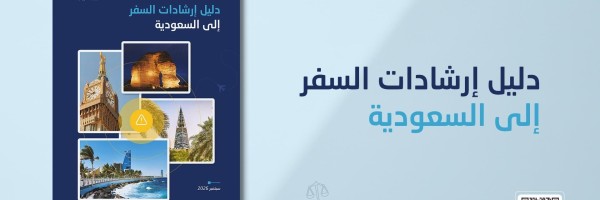
As Saudi Arabia steps up its “Visit Saudi” campaign, marketing itself as an emerging tourist destination, ALQST today issued a new travel advisory with essential background information for potential visitors. Without seeking to dissuade people from going there, it draws attention to the country’s troubling human rights situation and the risks for foreign visitors, so that they can make informed and ethically based decisions. It aims to help prevent people from getting into trouble or unwittingly becoming propaganda tools, and encourages them to think about the impact of their travels on ordinary Saudi people.
The advisory highlights the persistent pattern of repression and serious human rights abuses seen in Saudi Arabia for many years, and points out that this has recently been extending to foreign visitors as well. Over the past decade, the authorities have made sweeping waves of arbitrary arrests and imposed lengthy prison sentences on citizens and residents for peacefully expressing their opinions, both on- and offline. The advisory lists examples of foreign individuals who have also faced arrest and punishment for exercising the right to free speech, including social media posts published even before entering the kingdom. Once arrested, foreigners often face further violations of their rights within Saudi Arabia’s repressive criminal justice and prison systems.
Saudi Arabia carries out one of the highest rates of executions in the world – at least 345 in 2024 and 356 in 2025 – a high proportion of them, in violation of international law, for non-lethal drug offences committed by foreign nationals. The majority of these individuals have been from Asian and African countries, but visitors from the Global North are not immune from risk: in 2023 an Italian air stewardess was arrested and charged with possession and drug dealing after being found with a marijuana joint; she was handed a reduced sentence of six months in prison, however, after intermediation by Italian diplomats.
ALQST’s advisory also notes the unequal treatment between foreign visitors and Saudi citizens and residents: in 2019, as part of efforts to open up the country to international tourism, the authorities relaxed the strict dress code for women – but only for foreign visitors. Inviting influencers to Saudi Arabia and allowing them to dress as they wish for propaganda purposes has created confusion among local women, who have been led to assume that the same standards apply to them, whereas they do not in fact enjoy this freedom. Numerous Saudi women, including fitness instructor Manahel al-Otaibi, have since been arrested for wearing “indecent” clothing that would be acceptable in most parts of the world. A similar disparity exists between foreign visitors and the local population regarding lesbian, gay, bisexual and transgender (LGBT) rights.
Paradoxically, while the Saudi Tourism Authority urges international visitors to travel to the kingdom, there are Saudi citizens under travel bans that prevent them from leaving the country. Many are former prisoners of conscience who were eventually released but continue to face heavy restrictions on their freedom, including bans on work, social media and foreign travel.
Meanwhile, the top-down drive to develop a Saudi tourism industry is already having a negative human rights impact in several ways. The early stages of state-sponsored megaprojects at Neom and Jeddah – both named as host venues for the 2034 FIFA Men’s World Cup – involved arbitrary land seizure on a grand scale, and the enforced mass displacement of thousands of the areas’ inhabitants without adequate notification, consultation or compensation.
Additionally, the construction of vast amounts of tourism infrastructure, as well as infrastructure for the 2034 World Cup, is being carried out by an army of low-paid and vulnerable migrant workers from some of the world’s poorest countries. As these workers face routine abuse within Saudi Arabia’s barely reformed kafala (sponsorship) system, the country’s growing demand for migrant labour to build these projects significantly heightens the risks of large-scale exploitation and increasing numbers of worker deaths.
The travel advisory concludes by challenging potential visitors to think about the impact of their trip and, along with tour operators, bloggers and influencers, to be aware of this repressive human rights context, not to be fooled by official propaganda, and, where possible and safe to do so, to consider how they might support human rights victims at risk in Saudi Arabia.
ALQST’s Monitoring and Communications Officer Abdullah Aljuraywi comments: “From a patriotic standpoint, I have no objection to anyone visiting my country, whether for religious reasons, tourism, or anything else. What I do object to is these visits being used to present an inaccurate picture of the reality experienced by citizens and residents, or to give visitors privileges that ordinary citizens do not have. That is why I believe it is important for visitors to gain a genuine understanding of the reality we live in, rather than being used as a tool to promote the authorities’ narrative.”