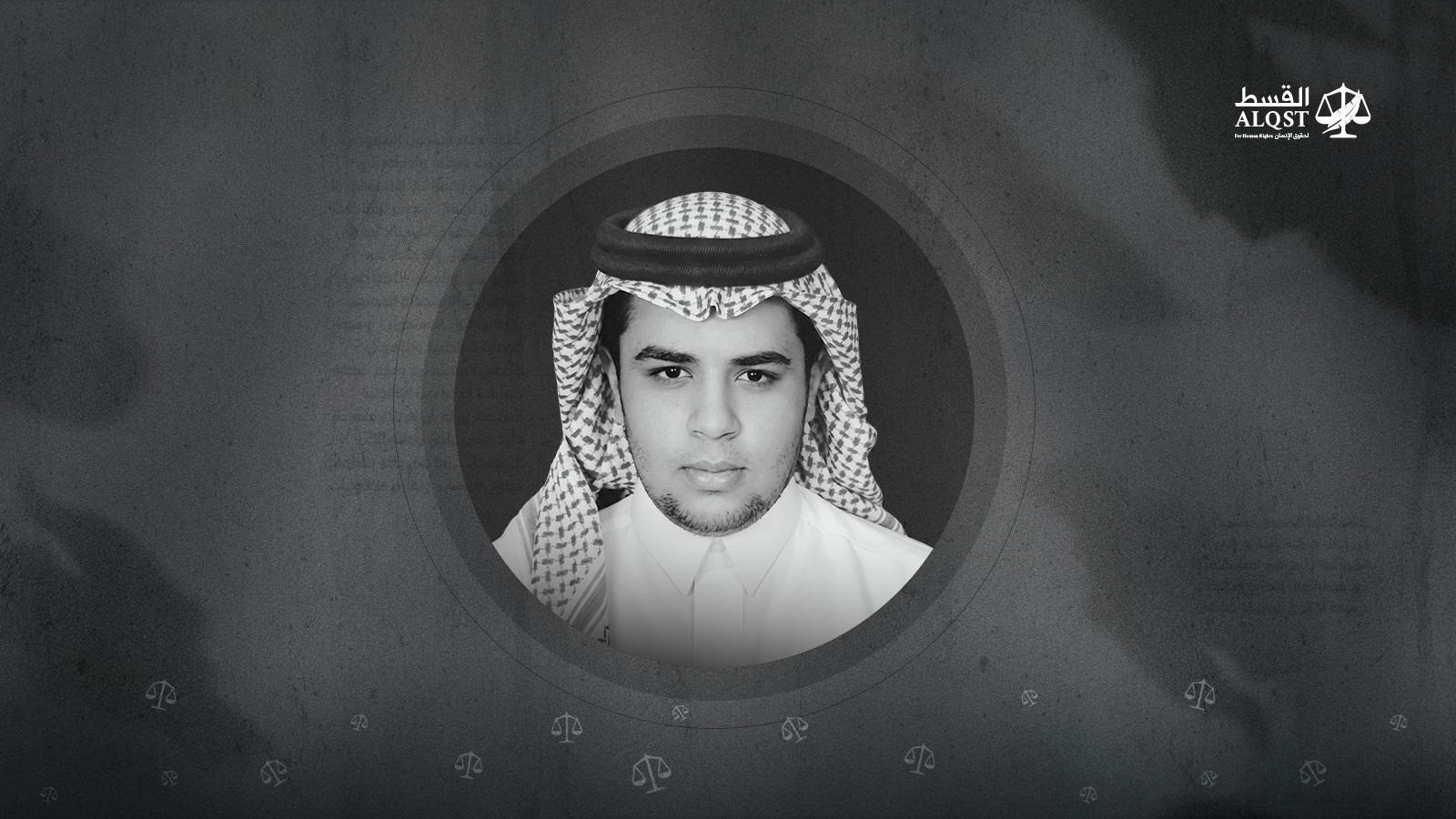
On 17 October 2026, Saudi Arabia’s authorities executed 29-year-old Hassan Zaki al-Faraj for alleged offences at least one of which dates back to when he was a child. He had taken part in protests against discriminatory treatment of the kingdom’s Shi’a minority, for which he was tried under flawed counter-terrorism legislation. He was executed alongside four other men from the Eastern Province convicted in the same case, illustrating the authorities’ use of capital punishment as a political tool against the Saudi Shi’a. Al-Faraj’s execution, the fourth known execution of a child offender in Saudi Arabia since August 2025, also heightens grave concerns for other child offenders on death row, including Youssef al-Manasef, whose death sentence was recently upheld by the Supreme Court.
ALQST’s Monitoring and Campaigns Officer Abdullah Aljuraywi comments: “The Saudi authorities have been exploiting heightened tensions in the region to step up their campaign of repression, with a slew of prosecutions relating to the expression of popular demands and activism by Saudi Shi’as. By executing five young men on a single day – one of them a minor at the time of his alleged offence – they are sending a message to intimidate the local populace. This reckless action demonstrates once again their excessive and inappropriate use of the death penalty, and calls for pressure to be urgently and strongly brought to bear to save the lives of others on death row.”
Announcing the executions, the Ministry of Interior accused the five men of carrying out “terrorist” crimes: “joining a foreign terrorist organisation”, “firing at security personnel”; “possessing weapons and ammunition”; and “financing and supporting terrorist acts”. It did not specify the acts attributed to each individual, and none of the alleged offences met the threshold of “the most serious crimes”, involving intentional killing, to which international law restricts use of the death penalty.
In further blatant disregard of international human rights law, al-Faraj (born 19 April 1997) was sentenced to death for alleged acts that took place when he was a child, in violation of the Convention on the Rights of the Child to which Saudi Arabia is a party. Arrested without a warrant on 28 November 2017, he was held for months in solitary confinement and subjected to brutal torture, including beatings and electric shocks, that resulted in multiple hospitalisations. In October 2020 he was brought before the Specialised Criminal Court, which handles terrorism-related cases, for a trial that fell seriously short of basic due process standards.
Al-Faraj’s execution follows those of child offenders Jalal Labbad (in August 2025), Abdullah al-Derazi (October 2025) and Ali al-Subaiti (April 2026), all in contradiction of official claims in 2020 to have ended the practice of executing child offenders in Saudi Arabia. It therefore raises renewed concerns for other child offenders on death row, including Youssef al-Manasef. Al-Manasef’s death sentence was recently upheld by the Supreme Court, placing him at imminent risk of execution.
UN experts have repeatedly found the detention and death sentences of al-Faraj, Labbad, al-Derazi, al-Manasef and other child offenders to be arbitrary, and as recently as April 2025 called for their immediate release.
Meanwhile, Saudi Arabia’s profligate use of the death penalty continues apace. The year 2025 saw the highest recorded number of executions (356) in Saudi history, and 187 people have been executed so far in 2026. The majority of executions this year (114) have been for non-lethal drug-related offences, and 15 for terrorist crimes, which according to the vague and overly broad definition in Saudi law can include a wide range of non-lethal acts. All of these executions for non-lethal acts clearly violate international human rights law, which limits use of the death penalty – where practised – to only “the most serious crimes”, involving intentional killing.
ALQST once again urges the Saudi authorities to immediately establish a moratorium on executions, with a view to abolishing the death penalty for all crimes. Pending full abolition, Saudi Arabia must immediately remove from its laws all death penalty provisions that are in breach of international human rights law, such as for crimes that do not meet the threshold of “the most serious crimes”, and for crimes committed by minors.